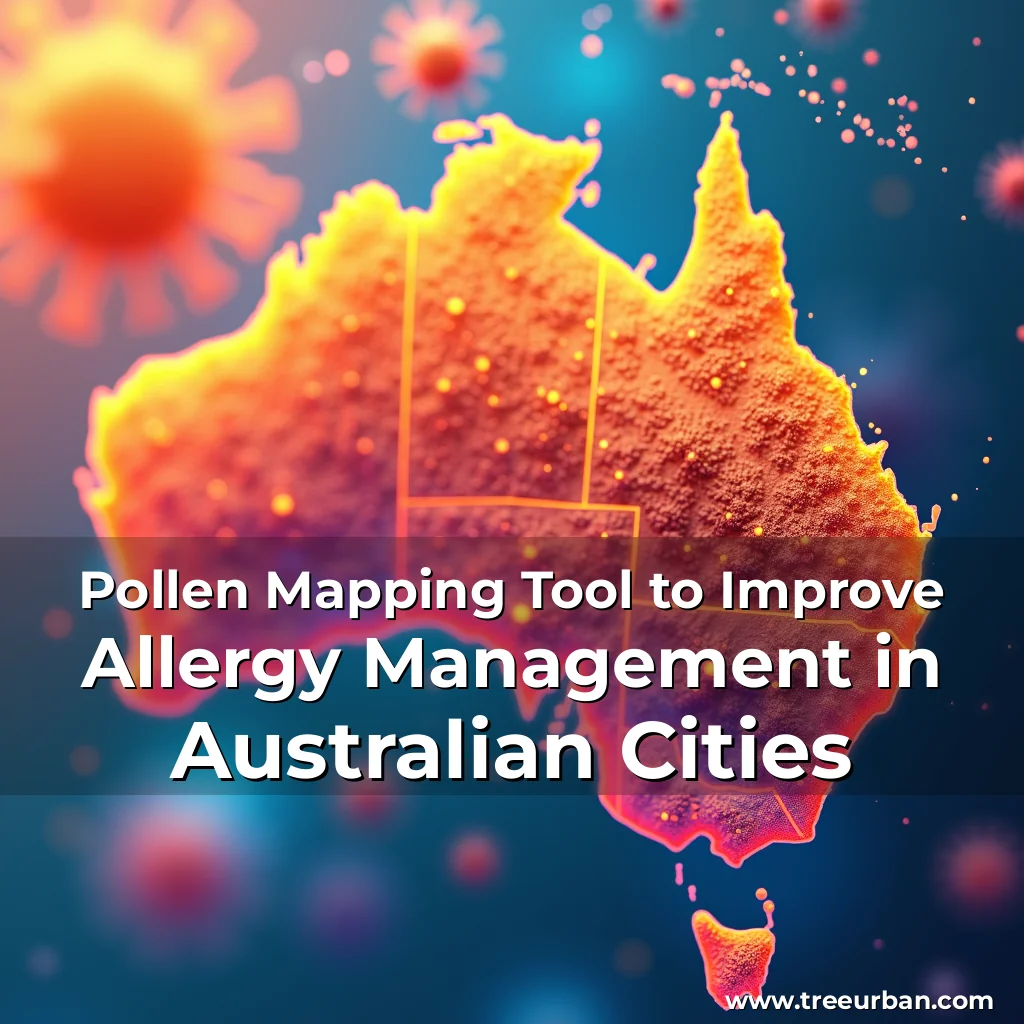
The impact of airborne allergens on urban residents cannot be overstated. A study conducted by the Edith Cowan University (ECU) has resulted in the development of an innovative mapping tool, designed to help individuals manage pollen allergies in four major Australian cities.
Identifying High-Risk Areas
• The tool pinpoints “hotspot” areas with elevated tree pollen levels, allowing allergy sufferers to plan alternative routes and minimize exposure. • By utilizing artificial intelligence and machine learning, the project aims to enhance its accuracy and provide more reliable forecasts of pollen risks. • Existing city council tree data is incorporated into the mapping program, providing a clearer picture of high-risk areas.
The Importance of Pollen in Allergy Sufferers
• One in four Australians is affected by hay fever, with pollen-related respiratory issues more common in cities due to higher concentrations of aeroallergens. • Grass pollen is the primary allergen, but tree pollen plays a significant yet often overlooked role in triggering allergies. • Exposure to high levels of tree pollen can trigger serious asthma attacks, including events like “thunderstorm asthma.”
Aerobiology Researcher Explains the Benefits of the Tool
Mary Hanson, ECU aerobiology researcher and lead author of the study, emphasized the significance of the project. “If people are able to avoid those hotspots by making minor adjustments to their lifestyle, like taking a different route home, it could improve their quality of life.”
Enhancing the Project with AI and Machine Learning
• The tool will be enhanced using artificial intelligence and machine learning to provide more accurate forecasts of pollen risks. • This will enable allergy sufferers to make informed decisions about their daily routines and minimize their exposure to high-risk areas.
Online Portal for Perth Area Under Development
• A dedicated online portal for the Perth area is currently under development and will provide daily forecasts and allergen updates. • This will provide users with the information they need to make informed decisions about their daily routines and avoid high-risk areas.
| City | Features of the Tool |
|---|---|
| Perth | Dedicated online portal with daily forecasts and allergen updates, incorporating existing city council tree data. |
| Melbourne | Utilizes artificial intelligence and machine learning to enhance the accuracy of pollen risk forecasts. |
| Sydney | Pinpoints “hotspot” areas with elevated tree pollen levels, allowing allergy sufferers to plan alternative routes and minimize exposure. |
| Adelaide | Provides a clearer picture of high-risk areas, incorporating existing city council tree data. |
• Improved Quality of Life: By providing users with accurate information about high-risk areas, the tool enables them to make informed decisions about their daily routines and avoid exposure to allergens. • Enhanced Allergy Management: The tool’s ability to pinpoint “hotspot” areas with elevated tree pollen levels allows users to plan alternative routes and minimize their exposure to allergens. • Increased Awareness: The online portal and daily forecasts will increase awareness among users about the risks associated with pollen and the importance of taking precautions.
In conclusion, the innovative mapping tool developed by the Edith Cowan University has the potential to significantly improve the quality of life for individuals with pollen allergies in Australian cities. By providing accurate information about high-risk areas and enabling users to make informed decisions about their daily routines, the tool has the power to enhance allergy management and increase awareness among users. As the project continues to evolve with the incorporation of artificial intelligence and machine learning, its potential to make a positive impact on the lives of allergy sufferers will only continue to grow.