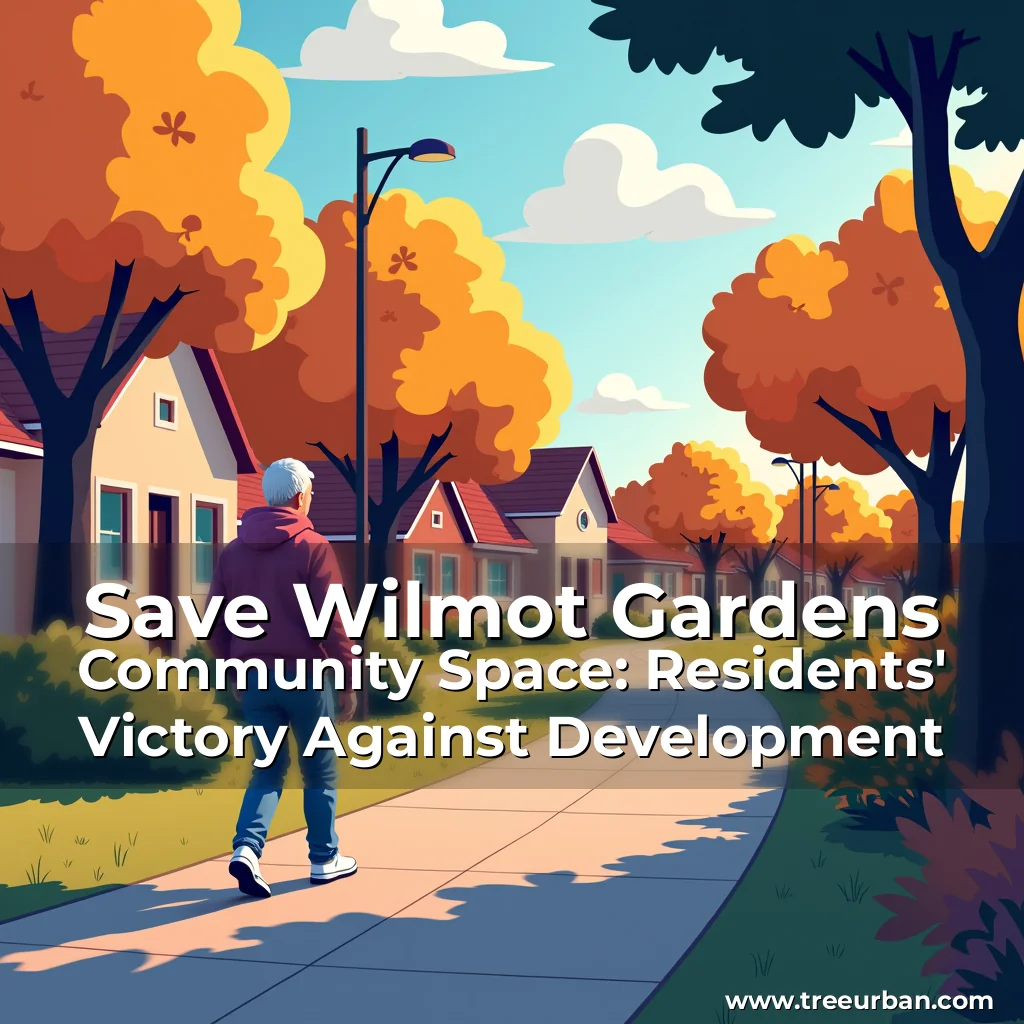
Residents of Crownhill in Plymouth breathed a collective sigh of relief after city planners rejected a proposal to build five affordable homes on the community-owned land adjacent to Wilmot Gardens.
The decision comes after a long-running battle to save the community space from development, dating back to 2021, when the plans were first submitted. Despite some concerns, including the loss of mature trees, the committee initially approved the plans, only for a high court to quash the decision following a legal challenge by protestors.
The council accepted the contention that it was necessary to include an appropriate condition to ensure the provision of affordable housing in perpetuity, but ultimately decided that the area’s significance outweighed the need for affordable homes.
Leading campaigner Matt Fleming, who gave an impassioned speech to councillors, said everyone living in the area of Wilmot Gardens, Cowley Road, and Ruskin Crescent would be thrilled by the news.
“We did not expect this,” he said. “I came in to do a speech, to give it my all, we had some really salient points and emailed councillors but I never expected what happened today.
“It has been going on for a good while and we had become despondent, feeling we didn’t have a voice and it would end up with planning permission being granted, but today it is absolute surprise and jubilation.
“We will now get on with making a village green application so we can secure that land for the future for the children of our area.”
Key arguments against the development included the impact on local children and the elderly, who would have to walk 800 metres to the nearest green space, crossing a “dangerous” road. Campaigners also raised concerns about the loss of mature trees and the potential for the site to become a “ghost estate” if it were built on.
City planners cited the need for affordable housing, but ultimately decided that the area’s significance outweighed the need for homes.
The decision was welcomed by campaigners, who had been fighting to save the community space for over a year.
“It’s a massive victory for the community,” said Matt Fleming. “We will now work tirelessly to get the site designated as a village green, so it can’t be built on and can remain a community space for generations to come.”
Campaigners also highlighted the importance of preserving green spaces in densely populated areas, citing the example of Bladder Meadow, which is a paid-for facility and not a natural green space.
“We’re not just fighting for Wilmot Gardens, we’re fighting for all the green spaces in our community,” said Matt Fleming.
Key points to consider:
- Residents of Crownhill in Plymouth fought to save Wilmot Gardens community space from development.
- The proposal to build five affordable homes was rejected by city planners.
- The area’s significance outweighed the need for affordable housing.
- Residents will now work to get the site designated as a village green.
Definitions:
What were the arguments against the development?
Campaigners raised several concerns against the development, including:
- Impact on local children and the elderly, who would have to walk 800 metres to the nearest green space, crossing a “dangerous” road.
- Loss of mature trees, which had significant amenity value.
- Potential for the site to become a “ghost estate” if it were built on.
- Council’s own ownership of trees, and the fact that it was not “good practice” for the council to serve a Tree Preservation Order (TPO) on itself.
What did the city planners say?
City planners cited the need for affordable housing, but ultimately decided that the area’s significance outweighed the need for homes.
They also acknowledged that the council was the largest owner of trees in Plymouth, and that there was a threat of losing public amenity spaces.
Key quotes:
“We are not going to go out and simply fell the trees,”— Alan Rowe, Tree Officer
“Trees can be grown on that space, but not if there are houses on it. We should not get completely focused on a few trees,”— Cllr Jeremy Goslin
“This is a massive development of a ‘small but beautiful site’,”— Cllr Maddie Bridgeman
“Why can’t we just add five houses somewhere else and not here? If we own the land why can’t it be given back to the people of Honicknowle and be granted village green status?”— Cllr Maddie Bridgeman
What’s next for the community space?
Campaigners will now work to get the site designated as a village green, so it can’t be built on and can remain a community space for generations to come.
They also highlighted the importance of preserving green spaces in densely populated areas, citing the example of Bladder Meadow, which is a paid-for facility and not a natural green space.
“We’re not just fighting for Wilmot Gardens, we’re fighting for all the green spaces in our community,” said Matt Fleming.
“It’s a massive victory for the community,” he added.