
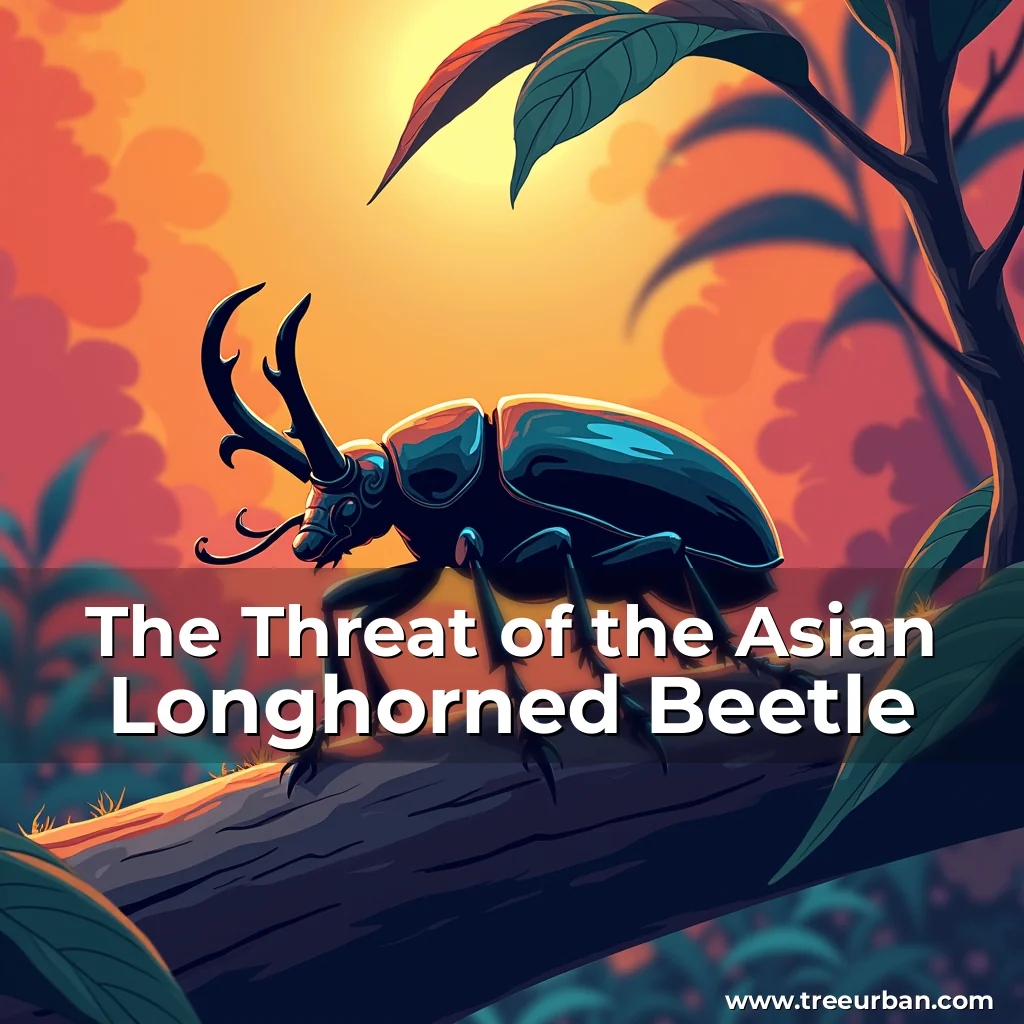
The Asian Longhorned Beetle (ALB) is an invasive insect that has been wreaking havoc on urban forests across the United States since its introduction in 1996. Native to China and Korea, this beetle has no natural predators in the United States and can cause significant damage to various hardwood tree species.
Characteristics and Life Cycle
Adult ALB beetles are large, measuring up to 1.5 inches in length, and are easily recognizable due to their distinctive black and white striped bodies. Their long antennae are a dead giveaway to their identity. The female beetles are responsible for laying eggs under the bark of infected trees, while the larvae feed on the living tissue, disrupting the tree’s ability to transport nutrients.
- The eggs hatch after two weeks, and the larvae bores into the tree, feeding on the nutrient-rich tissue.
- The larvae go through up to 13 growth phases, during which they tunnel into the tree trunk and branches, causing significant damage.
- The sawdust-like material, or frass, from the larvae’s burrowing is often found at the base of the tree.
Impact on Trees and Forests
The ALB’s feeding behavior disrupts the flow of water and nutrients through the tree, ultimately leading to the tree’s death. This can take several years, depending on the severity of the infestation and the tree’s overall health. Trees such as maples, willows, and elms are particularly vulnerable to the beetle’s attacks.
| Tree Species | Damage |
|---|---|
| Maple | Most vulnerable to ALB attacks, especially red maple. |
| Willow | Also susceptible to ALB damage, especially young and weak trees. |
| Elm | ALB attacks can cause significant damage to elm trees, leading to their decline. |
Efforts to Contain the Beetle
The eradication of the ALB is a top priority, and officials are working tirelessly to identify infestations and remove and destroy high-risk host trees. The public is also being asked to report any signs of the beetle, as early detection is crucial in preventing further spread.
- Call 866-702-9938 to report any signs of the beetle or tree damage.
- Fill out the online form at www.aphis.usda.gov/pests-diseases/alb/report to report any sightings.
- Take digital pictures of the beetle and any damage for official records.
- Freeze any suspected ALB insects to preserve them for identification.
Prevention and Education
Preventing the spread of the ALB requires a concerted effort from the public, officials, and tree care professionals. By being aware of the signs of the beetle and reporting any sightings, individuals can play a crucial role in containing the spread of this invasive species.
“The ALB is currently confined to a state and federally regulated quarantine zone that includes portions of Charleston and Dorchester counties,” said Jacob Beach, the ALB program manager with Clemson University. “While additional infested trees have been found within the existing quarantine area, there is no indication the beetle has spread into Berkeley County.”
Conclusion
The Asian Longhorned Beetle is a significant threat to urban forests in the United States, and its eradication is a top priority. By working together, we can prevent the spread of this invasive species and protect our natural resources.