Understanding the Issue of Tree Equity
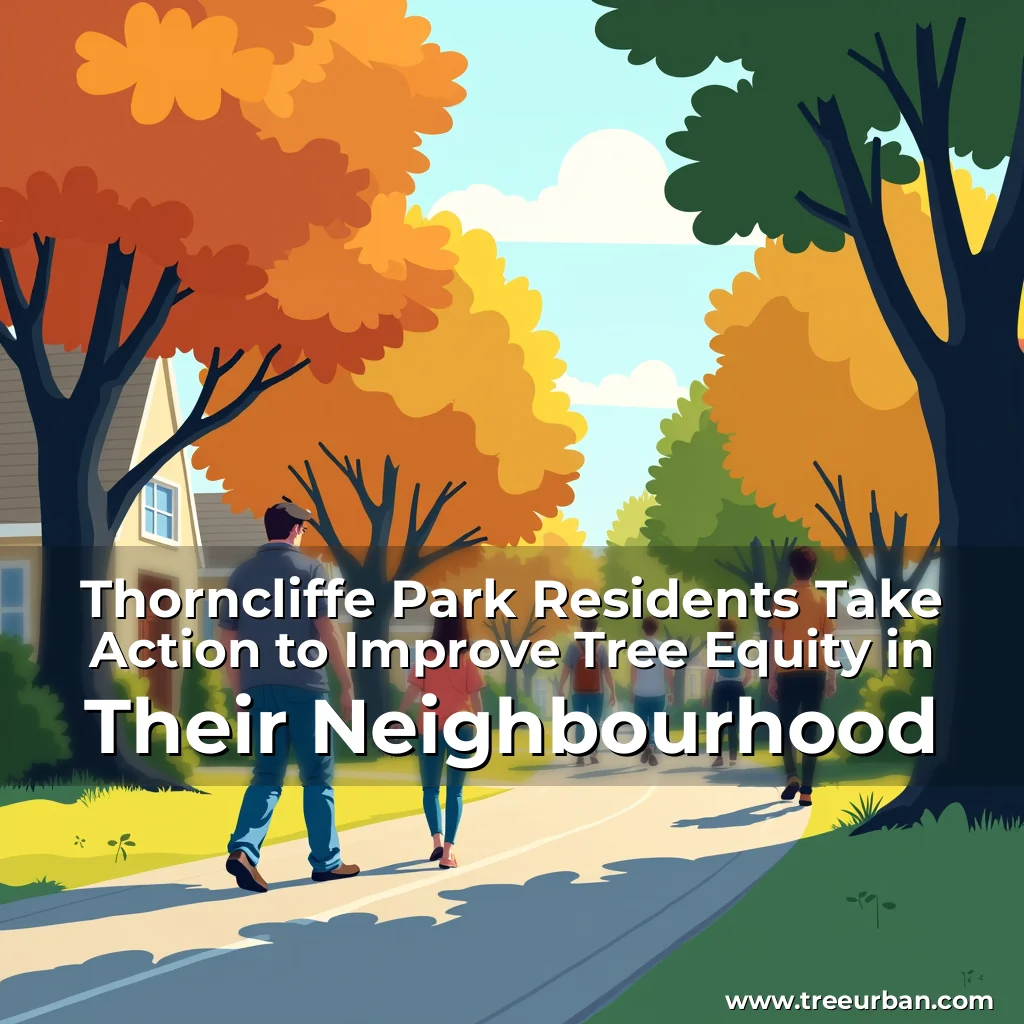
Tree equity is the fair distribution of trees in all neighbourhoods, but a 2023 study on urban forestry reveals that Toronto has an unequal distribution based on socioeconomic factors like income and race. In Thorncliffe Park, some areas have as low as nine per cent tree canopy cover, and the average temperature is 2.3 C hotter than the rest of the city, causing residents to experience intense heat. This is a pressing issue, as residents without air conditioning struggle to stay cool, and those with access to trees are able to find respite.
Why Tree Equity Matters
• **Improved air quality**: Trees absorb pollutants and produce oxygen, improving air quality and human health. • **Heat mitigation**: Trees provide shade, reducing the urban heat island effect and alleviating heat-related illnesses. • **Increased property values**: Well-maintained trees can increase property values and make neighborhoods more attractive to residents and businesses. • **Enhanced community engagement**: Tree equity initiatives can foster community engagement and social connections among residents.
The Thorncliffe Park Urban Farmers Group Takes Action
The Thorncliffe Park Urban Farmers Group, in partnership with the Toronto Environmental Alliance (TEA) and Don Valley West for Environmental Action, organized a tree walk in the neighborhood to educate residents about existing trees and empower them to join local advocacy groups. The event was a success, with residents learning about the importance of tree equity and how they can contribute to the cause.
- Michelle Delaney, project lead of Thorncliffe Park Urban Farmers, emphasizes the need for tree equity in overcrowded and heat-prone neighborhoods like Thorncliffe Park.
- Aruna Samant, a new immigrant in East York, credits the tree walk with empowering her to take action and join local advocacy groups.
Empowering Residents to Take Action
The tree walk was not only an educational event but also a call to action. Residents learned about the importance of tree equity and how they can contribute to the cause. Emily Alfred, a waste campaigner at TEA, explains that all Torontonians can take care of trees in their neighborhoods, but it is also important to push municipal, provincial, and federal levels of government to take action.
| Level of Action | Solutions |
|---|---|
| Municipal level | Planting trees on public property like boulevards and in public parks. |
| Provincial level | Implementing policies to support tree equity initiatives. |
| Federal level | Providing funding for tree equity initiatives. |
Community Engagement and Revitalization
While TEA hopes to conduct tree walks with local groups in other low-income neighborhoods, the Thorncliffe Park Urban Farmers Group is continuing their work to revitalize unused lawn space into communal gardens and plant more fruit trees in their neighborhoods. This initiative not only improves the aesthetic appeal of the neighborhood but also provides residents with a sense of community and connection to nature.
“We have a lot of high-rise buildings that are overcrowded and because of that, we have a lot of power outages. [There are] people who don’t have air conditioning, so you know those people can come outside and cool down under trees, but we need those types of spaces for people.” – Michelle Delaney, project lead of Thorncliffe Park Urban Farmers
“I realized the different ways by which you can bring change. People here are putting in effort. Organizations like TEA or the Urban Farmers have already travelled a path, they have set an example which I found in this community most suitable.” – Aruna Samant, new immigrant in East York
“We need to get more trees planted on private property around rental buildings, we need more trees on public property like the boulevards on the street and in public parks, and we can also look at schoolyards and other community spaces.” – Emily Alfred, waste campaigner at TEA
In conclusion, the Thorncliffe Park Urban Farmers Group’s initiative to improve tree equity in their neighborhood is a testament to the power of community engagement and advocacy. By educating residents about the importance of tree equity and empowering them to take action, the group is working towards a more sustainable and equitable future for all. As Emily Alfred emphasizes, “To improve the urban forest, we really need to look at solutions on every level.” By working together, we can create a better future for our communities and our planet.